Is Medical Cannabis Addictive? An Honest Answer
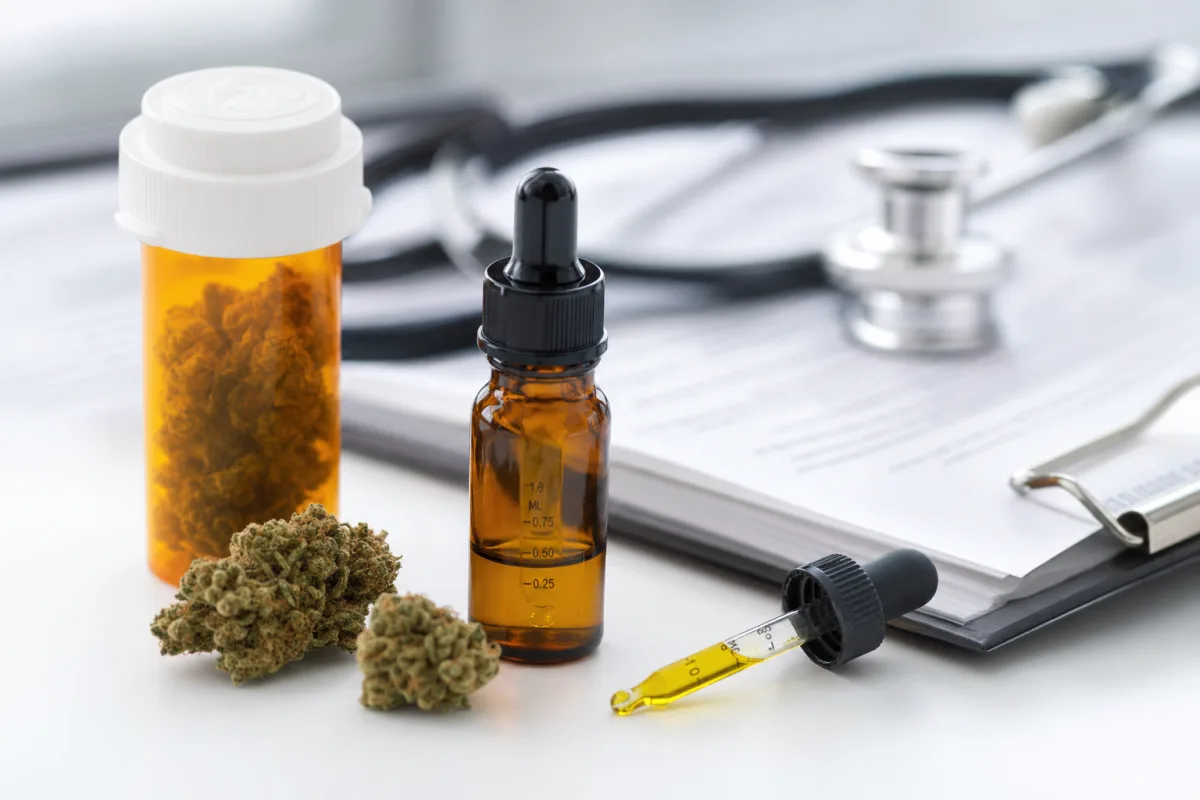
This question stops many patients before their first visit - and rightly so, because it deserves an honest answer, not marketing reassurance. In short: medical cannabis carries some addiction potential, but lower than alcohol, nicotine or opioid medications, and under doctor-supervised therapy the risk is low.
Below we lay it out without sugarcoating: where the risk comes from, who it affects most, and what genuinely limits it.
Where the risk comes from
The addiction potential comes from THC - the psychoactive compound. In some people, especially with prolonged use of high doses, dependence can develop, mostly psychological (the urge to use), less often with mild withdrawal symptoms (irritability, worse sleep).
CBD is different here - it isn't addictive and is even studied as support for recovery from other addictions. That's why the preparation's profile matters.
In context - the comparison
The risk of cannabis dependence is estimated far lower than for nicotine, alcohol or opioids. This matters, because many of our patients turn to medical cannabis precisely to come off stronger, more addictive drugs.
Cannabis also doesn't cause physical addiction in the way opioids do - there are no dangerous, health-threatening withdrawal syndromes. That doesn't mean "zero risk", but "a real, moderate, controllable risk".
What limits the risk in therapy
Medical therapy differs from recreational use in three ways:
The doctor also watches for risk factors: history of addiction, young age, mental illness. People in a risk group are approached more cautiously or advised against.
When to take extra care
Higher risk applies to people with a history of addiction, the very young (developing brain), and those simply seeking a "high" rather than relief. Cannabis therapy isn't that - and the doctor catches it during qualification.
Unsure whether it's safe in your case? That's a good question for the first visit - the doctor assesses your situation individually. Phone: +48 731 000 645. More on choosing THC and CBD in our article on their differences.
Ready to start therapy?
Book online in 60 seconds - consultation at our clinic in Krakow, Bydgoszcz, Toruń or Kielce.
Book a consultation