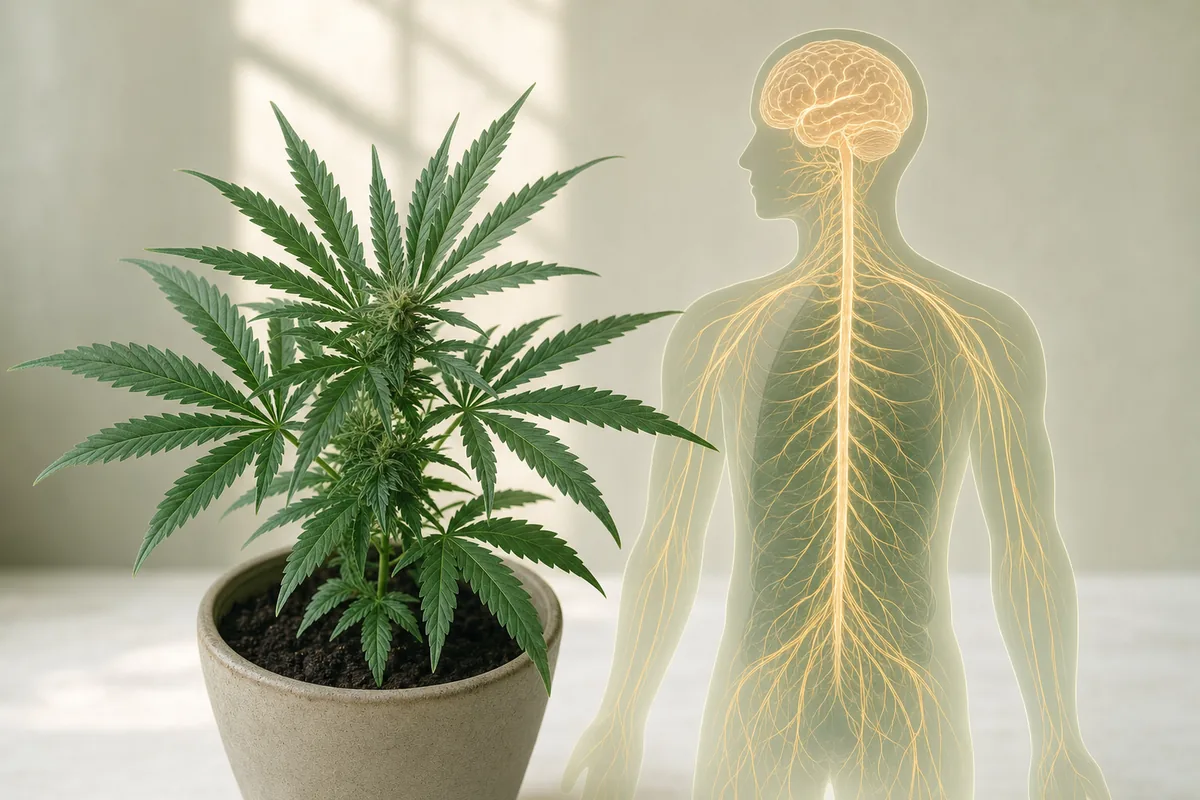
The Endocannabinoid System - How Cannabis Works
Why can a single plant help with such different conditions - from pain, through sleep, to appetite and mood? The answer lies in our own body. Each of us has an endocannabinoid system, ECS for short, that cannabis simply stimulates.
This is not magic or marketing - the ECS was discovered in the 1990s and has since been recognised as one of the main systems keeping the body in balance.
What the endocannabinoid system is
The ECS is a network of three parts: receptors, the body's own substances (endocannabinoids) and the enzymes that build and break them down. The key receptors are:
The body produces its own endocannabinoids (such as anandamide) that act on these receptors like a key in a lock.
What it governs day to day
The ECS exists to maintain homeostasis, meaning internal balance. Among other things it regulates or co-regulates:
When that balance wavers, symptoms appear - and this is exactly where cannabis can support the body.
How THC and CBD come in
Cannabis compounds resemble our own endocannabinoids, so they fit the same receptors. THC binds directly to the CB1 receptor, which explains its effect on pain, sleep and mood, but also the psychoactive effect. CBD works differently - it does not stimulate CB1 directly but modulates the whole system and softens some of THC's effects.
That is why the ratio of THC to CBD matters in therapy. We expand on this in THC or CBD, and we cover the role of aromas in terpenes.
What it means for the patient
Understanding the ECS helps make sense of why dosing is individual - each of us has a slightly differently tuned system. That is why a doctor selects the therapy and starts with small doses.
If you are considering treatment, start with how to get a prescription. The first visit takes place in person in Krakow, Bydgoszcz, Torun or Kielce, and you book a slot at 731 000 645.
Ready to start therapy?
Book online in 60 seconds - consultation at our clinic in Krakow, Bydgoszcz, Toruń or Kielce.
Book a consultation